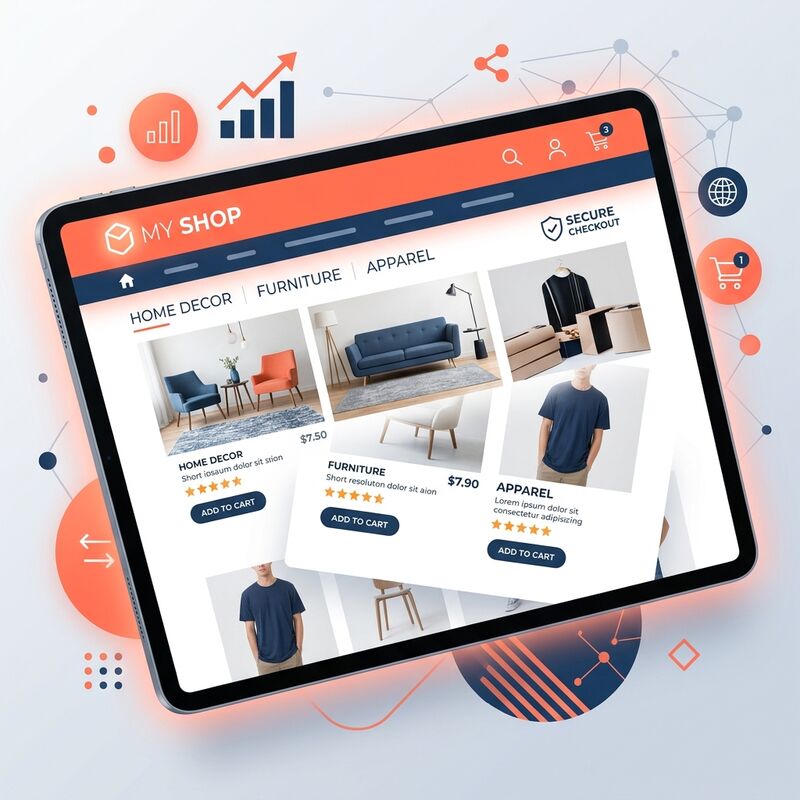
Selling online in Brunei isn't as simple as installing WooCommerce. Here's the real landscape — payment options, logistics, and what actually converts in BN.
The Brunei E-Commerce Opportunity Most Businesses Are Missing
Brunei's internet penetration sits above 95% — nearly every adult in the country is online. Yet the number of locally-built, properly functioning e-commerce stores remains surprisingly low. Most businesses resort to selling via Instagram DM and WhatsApp, which works to a point but creates a ceiling. Customers can't browse your full catalogue, can't check out at 2am when the impulse strikes, and can't trust a brand that has no proper storefront. This gap is an opportunity for any Brunei business willing to build it properly.
The Payment Gateway Problem — and How to Solve It
The most common question from Brunei businesses: 'Can I accept credit cards and online payments?' The answer is yes, but it requires planning. International options like Stripe require business registration and can be set up to accept cards from Brunei and Malaysia. For cross-border reach into Malaysia, solutions like PayHere, Billplz, or ToyyibPay serve the RM-denominated market. For Brunei-specific transactions, BruPay and informal bank transfer flows are common. The key is to offer multiple payment options — a customer who can't pay their preferred way is a lost sale.
Logistics: The Delivery Problem Nobody Talks About
Building the store is step one. Getting products to customers is step two — and often harder. For Brunei-only delivery, local courier partnerships (like Pос or informal delivery services) are the current norm. For cross-border sales into Malaysia/Singapore, using Pos Malaysia-integrated fulfilment or dropshipping from a Malaysian warehouse reduces complexity. Build your shipping workflow before you launch, not after. A customer who orders at 9pm wants an estimated delivery date immediately — not a WhatsApp message the next morning.
Platform Choice: Shopify vs WooCommerce vs Custom
Shopify is the fastest path to a functioning store — subscription-based (roughly USD 29–79/month), hosted globally, with payment integration built in. The limitation: limited SEO control and ongoing subscription costs. WooCommerce (WordPress plugin) gives more SEO flexibility and is lower cost long-term but requires more technical management. A custom Next.js + Stripe build offers maximum performance and full control but costs more upfront. For most Brunei SMEs starting out, Shopify or a professionally configured WooCommerce site is the right balance.
What Actually Converts Brunei Online Shoppers
Conversions in Brunei's market are driven by trust signals above everything. Professional product photography (not phone photos with bad lighting), clear pricing in BND, visible WhatsApp contact (Bruneians expect to be able to ask questions before buying), genuine customer reviews, and delivery time estimates visible on the product page. Return policy clarity matters enormously — customers who can't easily return a product won't risk buying in the first place. Build trust before you optimise for conversion.
SEO for E-Commerce: How to Rank Your Products on Google
Every product page is an SEO opportunity if structured correctly. Each product needs a unique title that includes the product name and a relevant keyword ('Handmade Baju Kurung Brunei — Modern Fit'), a written description with natural keyword usage (not keyword stuffing), proper image alt text, and schema markup so Google can display your products in rich results. Category pages targeting 'buy [product category] online Brunei' are often higher value than individual product pages for driving initial discovery traffic.
Mobile-First Is Non-Negotiable
Over 80% of online shopping in Southeast Asia happens on mobile. Your store must be fast, thumb-friendly, and checkout must work smoothly on a smartphone. A checkout process that requires zooming in, has tiny buttons, or pops up keyboard when you don't expect it loses sales. Test every step of your checkout on a real phone — not just Chrome's mobile emulation. Payment buttons must be full-width, forms must auto-complete where possible, and page load time on mobile must be under three seconds.
Should You Build Now or Wait?
The best time to build your store was when you had your first customer. The second best time is now. Every month you sell exclusively through Instagram DM is a month of data — customer preferences, bestselling products, price sensitivity — that you're not capturing in a structured way. An e-commerce store gives you inventory analytics, customer purchase history, email list growth, and SEO compound interest. The businesses that build early in Brunei's developing e-commerce market have a significant first-mover advantage in organic search rankings.